

ISO 21815-4 Compliance: The AI “Swing Standard” for Safer Heavy Machinery
ISO 21815-4 is redefining what “acceptable safety” means for earth-moving machinery operating near people—especially in environments where swing and rotation create unpredictable, high-severity risks. As job sites become more complex and regulatory expectations rise, traditional detection systems are no longer sufficient.
This guide explains why legacy sensors struggle in swing scenarios, what ISO 21815-4 requires in practice (including object classification and dynamic risk zoning), when and where it applies in real operations, and how AI-powered perception systems help fleets and OEMs achieve compliance while improving real-world safety outcomes.
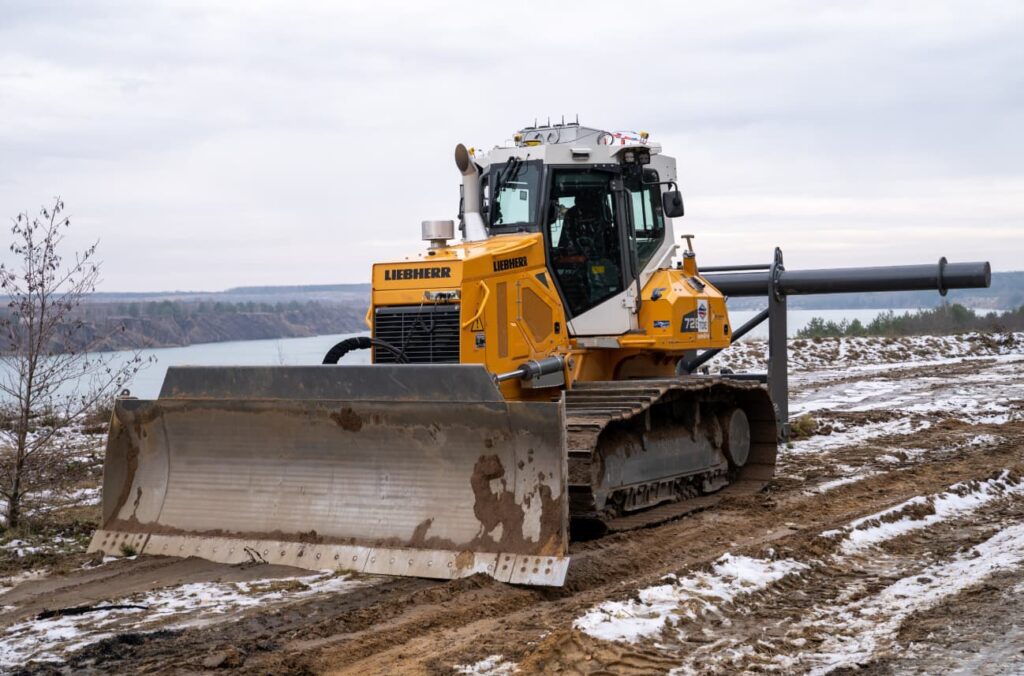
What ISO 21815-4 is and why it matters now
ISO 21815-4 introduces a new safety baseline for earth-moving machinery, specifically addressing risks associated with machine rotation and swing zones.
Why this matters commercially
- Project eligibility and tenders
- Safety audits and certifications
- Legal defensibility and insurance
Where and when ISO 21815-4 applies
ISO 21815-4 is part of a broader evolution of machinery safety standards. Unlike regulations, it does not become mandatory on a single global date—instead, it becomes applicable progressively across the industry.
When does ISO 21815-4 become “mandatory” in practice?
ISO 21815-4 adoption follows a three-phase timeline driven by market, OEMs, and regulation:
Phase 1: Available today (2024–2025) — Early adoption
- AI-based systems already meet key requirements (classification, dynamic zones)
- Adopted by:
- Safety leaders
- High-risk operations
- Forward-looking OEMs
Status: Optional, but already deployed in real environments
Phase 2: Commercial requirement (2025–2026) — Market pressure
- Increasingly required in:
- Large construction and infrastructure projects
- Mining and quarry contracts
- Corporate safety policies
- OEMs begin integrating compliant systems as standard or expected options
Status: Not legally mandatory, but often contractually required
Phase 3: Industry expectation (2026–2027+) — De facto standard
- Becomes:
- Expected in safety audits
- Required in many tenders
- Referenced in insurance and compliance frameworks
- Non-compliant systems become:
- Harder to justify
- Higher liability risk
Status: Effectively mandatory in many real-world operations
Where ISO 21815-4 applies most
The standard is especially relevant for:
- Excavators and loaders with 360° swing capability
- Confined or congested job sites
- Mixed environments with pedestrians and machines
New vs existing equipment
New equipment (OEM integration):
- Primary focus of the standard
- Increasingly required in procurement specification
Existing fleets:
- Not always mandatory
- But strongly recommended for:
- High-risk machines
- Sites with pedestrian exposure
- Often driven by:
- Clients
- Insurance
- Internal safety policies
What this means for your operation (decision layer)
- If you are buying equipment in 2025–2026:
You should require ISO 21815-4–ready systems now to remain competitive and compliant with upcoming project requirements.
- If you manage an existing fleet:
You may not be forced immediately—but retrofitting high-risk machines is quickly becoming a best practice and competitive necessity.
- If you operate in high-risk environments:
Waiting increases:
- Safety exposure
- Legal liability
- Risk of losing contracts
Bottom line: The real question is not “when is it mandatory?”
It’s “when will it impact your business?”
The “false positive trap” in swing environments
Why simple sensors struggle when machines rotate
Traditional sensors detect objects—not meaning. In swing scenarios, they trigger alerts for walls, piles, or trucks, creating constant noise.
Why false alarms become a safety risk
- Alarm fatigue
- Operator disengagement
- System deactivation
This undermines safety and weakens compliance posture .
What ISO 21815-4 demands in practice (as framed for buyers)

Requirement 1: Object classification (human vs background)
Systems must identify humans specifically—not just detect objects .
Requirement 2: Dynamic risk zones, not static circles
Risk zones must adapt to machine swing behavior, not rely on fixed distances.
Requirement 3: Actionable timing (before the dangerous movement)
Alerts must occur before swing risk escalates—not after.
Why ISO 21815-4 compliance is difficult for legacy systems
Legacy radar/ultrasonic approach
- Generic detection
- Static zones
- High false alarms
- Late alerts
AI-powered perception approach (Blaxtair positioning)
- Human classification
- Dynamic zones
- Low false positives
- Pre-movement alerts
- System integration
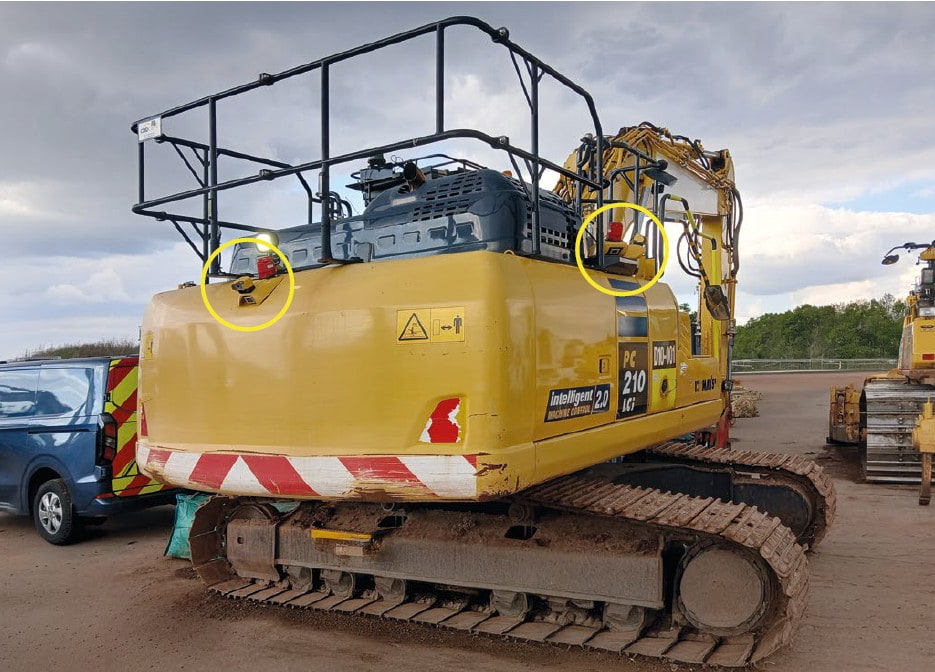
How Blaxtair supports ISO 21815-4 readiness
1) Human-first detection in complex environments
Meaningful alerts → higher trust → sustained usage
2) Dynamic risk zone adaptation
Real-time zones aligned with swing movement
3) Pre-movement risk anticipation
Early warnings enable prevention—not reaction
4) Reduced false alarms = real safety adoption
Eliminates alarm fatigue and improves compliance
Buyer checklist: What to require from an ISO 21815-4 solution
When evaluating solutions, buyers should focus on proof—not promises.
Core requirements:
- Human classification (not generic detection)
- Dynamic risk zones tied to swing behavior
- Low false-positive performance in cluttered environments
- Intervention timing aligned with swing risk (pre-movement alerts)
- Integration capabilities (CAN, hydraulics, system interfaces)
- Documentation for compliance, tenders, and safety cases
- Pilot plan with clear acceptance KPIs
If a vendor cannot demonstrate these with real data, they are unlikely to meet ISO 21815-4 expectations in practice.
30-day ISO 21815-4 readiness pilot
A structured pilot is the fastest way to validate compliance and build audit-ready proof.
Week 1: Risk mapping and baseline
- Identify high-risk swing tasks
- Map machine movement zones
- Analyze shift patterns and pedestrian exposure
Weeks 2–3: Validate performance against KPIs
- False alerts per hour during swing cycles
- Missed detections (controlled occlusion tests)
- Reaction timing (alert window before risk escalation)
- Operator acceptance score (weekly feedback surveys)
Week 4: Compliance package output
- KPI performance report
- Configuration documentation
- Recommended rollout plan
Prepare Your Fleet for ISO 21815-4, and shift toward intelligent, proactive safety.
Request a Blaxtair demo to evaluate your current system and launch a 30-day readiness pilot tailored to your operations.
FAQs
What is ISO 21815-4?
ISO 21815-4 is a safety standard for earth-moving machinery that, as framed in Blaxtair’s strategy materials, focuses on high-risk swing/rotation scenarios and drives requirements such as object classification and dynamic risk zoning.
Why do legacy radar and ultrasonic systems struggle with ISO 21815-4 scenarios?
Legacy radar and ultrasonic systems struggle with ISO 21815-4 scenarios because swing environments create constant “false positives” from background objects (walls, piles, trucks), leading to nuisance alerts and operator distrust rather than reliable human risk recognition.
What should buyers ask a vendor when evaluating ISO 21815-4 readiness?
Buyers should ask a vendor when evaluating ISO 21815-4 readiness for proof of human classification (not generic detection), dynamic risk zone behavior during swing cycles, false-alarm performance in clutter, intervention timing, and a measurable pilot plan with audit-ready documentation.