

How OEMs Can Build Safer Machines: Integrating AI Pedestrian Detection from the Start
For OEMs, safety is no longer just a compliance checkbox—it has become a core component of machine design and brand value. As industrial environments grow more complex and safety regulations evolve, manufacturers are expected to provide equipment that actively protects both operators and nearby workers.
Integrating AI pedestrian detection directly into new machines offers a forward-looking approach to industrial safety. Rather than relying on aftermarket solutions, OEMs can embed intelligent perception systems into the machine architecture from the very beginning.
This approach enables equipment to deliver reliable collision prevention capabilities while simplifying compliance with emerging safety standards. It also allows manufacturers to differentiate their products with built-in safety intelligence.
Technologies like Blaxtair—developed through years of deployment across industrial vehicles and heavy machinery—demonstrate how AI vision can become a natural part of machine design, helping OEMs deliver equipment that is safer, smarter, and ready for the future.
Why Safety Can No Longer Be an Afterthought
Industrial vehicle safety has moved to the forefront of equipment design. Customers now expect machines that include advanced safety systems as standard features rather than optional upgrades.
At the same time, international standards are evolving to encourage the integration of automated safety technologies. Regulations such as ISO 3691, EN 1175, and the upcoming EU Machinery Regulation (2027) are pushing manufacturers toward embedded pedestrian detection and intelligent collision avoidance solutions.
Designing safety into the machine architecture from the start provides several strategic advantages:
- Easier compliance with evolving safety regulations
- Increased product value and competitiveness
- Reduced risk of workplace incidents for end users
- Stronger brand reputation for safety innovation
For OEMs, this shift marks a fundamental transition: safety systems are no longer accessories—they are becoming an integral part of modern machine engineering.
From Reactive to Proactive: The Shift in OEM Safety Design
Historically, pedestrian safety around industrial machines relied heavily on operator vigilance and basic warning systems. Cameras, mirrors, alarms, or radar sensors were often added later to compensate for blind spots.
While these tools can improve awareness, they remain reactive solutions.
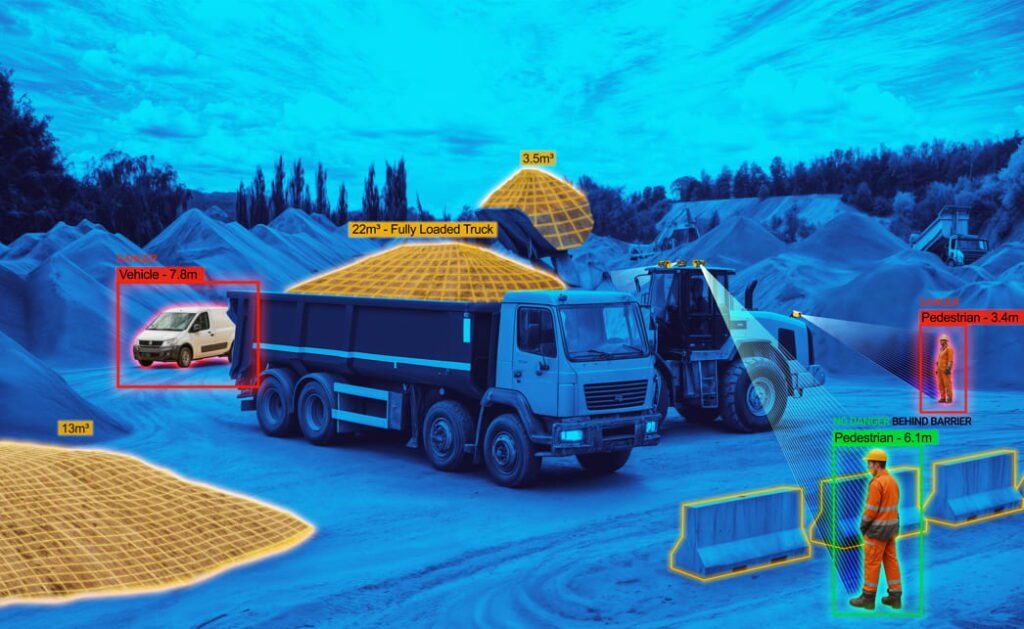
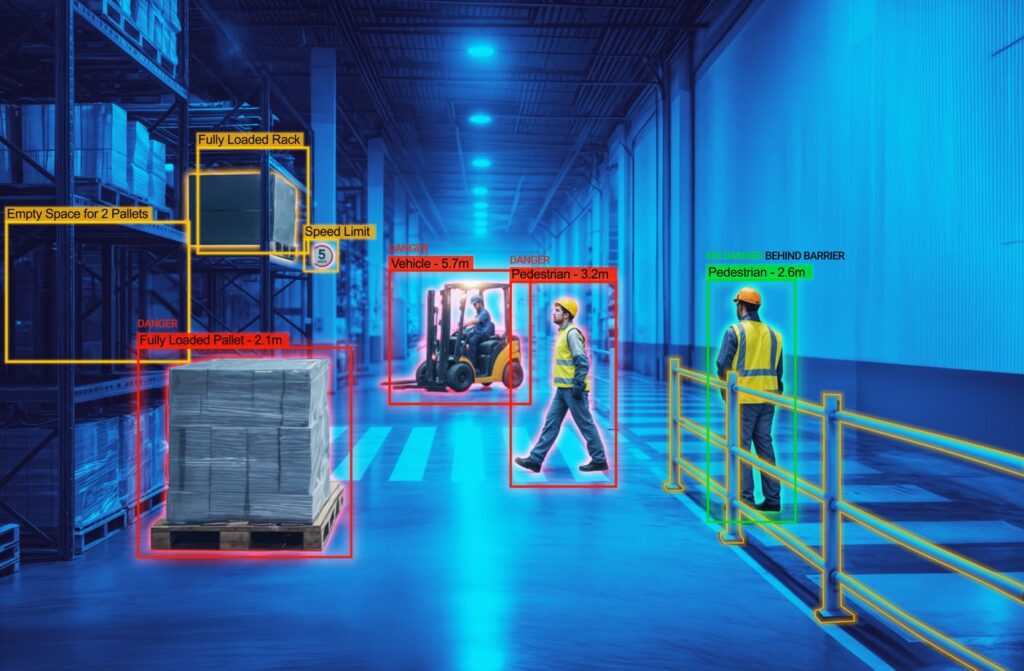
AI-powered vision systems introduce a proactive safety layer. By continuously analyzing the machine’s surroundings, these systems can detect pedestrians and warn operators before a dangerous situation develops.
When integrated during the design phase, AI detection systems can be optimized for:
- Camera positioning and field of view
- Wiring and power supply architecture
- Processing latency and alert logic
- Coverage of high-risk blind zones
This design-stage integration ensures the safety system operates as a seamless component of the machine.
However, the effectiveness of an AI detection system depends not only on hardware integration—but also on the quality and scale of the data used to train the algorithms.
Blaxtair’s AI models are trained on one of the most specialized industrial datasets available, built from years of real-world machine deployments. This data includes thousands of scenarios involving heavy equipment, pedestrians, complex worksites, and challenging environmental conditions.
Because the algorithms are trained on real industrial environments—not generic image datasets—they can recognize pedestrians reliably even in difficult conditions such as dust, cluttered job sites, or low-light areas.
The Benefits of Integrating AI Detection Early in the Design Process
Embedding AI pedestrian detection during the engineering phase provides important advantages for OEM manufacturers.
Seamless Hardware Integration
Early design integration allows engineers to position cameras strategically to ensure full coverage of blind spots around the machine.
Clean Electrical Architecture
The safety system can share communication protocols such as CAN or Ethernet with other onboard electronics, reducing installation complexity.
Factory-Level Calibration
Validation during production ensures consistent detection performance across the entire machine fleet.
Reduced Integration Risk
Using a proven AI detection platform reduces the uncertainty often associated with deploying new safety technologies in operational environments.
OEM Product Differentiation
Machines equipped with embedded AI pedestrian detection provide a strong competitive advantage in industries where safety performance is increasingly a purchasing criterion.
How Blaxtair Works with OEM Design Teams
Integrating safety systems into new machinery requires close collaboration between technology providers and OEM engineering teams.
Blaxtair has supported multiple equipment manufacturers in embedding pedestrian detection capabilities directly into industrial vehicles and heavy equipment platforms. This experience allows OEM partners to benefit from both integration expertise and field-proven AI technology.
Collaborative Design Integration
During the design phase, Blaxtair engineers work with OEM teams to analyze CAD models and simulate detection zones around the machine.
This process helps determine optimal camera placement and ensures complete coverage of critical blind spots.
Flexible Hardware Architecture
Blaxtair’s compact hardware platform can be integrated into a wide range of machines, including:
- Forklifts
- Loaders
- Dump trucks
- Excavators
- Mining vehicles
The system supports standard industrial communication protocols such as CAN and Ethernet, making it compatible with modern vehicle architectures.
AI Trained on Real Industrial Data
One of the most important factors behind reliable pedestrian detection is algorithm training.
Blaxtair’s AI models have been trained using a proprietary database built from years of field deployments across multiple industries including logistics, construction, mining, and manufacturing.
This dataset captures real operating conditions such as:
- Dust and debris
- Partial pedestrian visibility
- Crowded industrial environments
- Varying lighting conditions
- Dynamic machine movements
As a result, the system can distinguish pedestrians from surrounding objects with high reliability while minimizing false alerts.
Engineering and Validation Support
Blaxtair engineers also support OEM teams during prototype validation and certification stages, ensuring the system meets safety and performance requirements before production.
Real-World Example: Safer Loaders Through Built-In AI Detection
One equipment manufacturer integrated Blaxtair pedestrian detection directly into its loader product line during the development phase.
The results demonstrated clear safety improvements:
- Simplified factory installation
- Rapid adoption among end users
- Improved compliance with site safety requirements
Because the technology was integrated during the design stage, the machines delivered consistent safety performance without requiring aftermarket modifications.
Market Recognition: Why OEMs Trust Proven AI Safety Systems
As AI safety technologies continue to evolve, equipment manufacturers are placing increasing importance on solutions that have demonstrated reliability in real operating environments.
Industry discussions with OEMs—particularly during major trade events such as CONEXPO—highlight a consistent message: manufacturers prioritize technologies backed by extensive field deployments and proven detection performance.
Pedestrian detection around heavy machinery is a safety-critical function. Systems must operate reliably across highly variable industrial conditions.
Solutions developed through long-term industrial deployments and trained on specialized datasets provide the level of maturity required for these environments.
For OEMs designing the next generation of machines, selecting a technology partner with deep operational experience and validated AI models is becoming an essential part of safety integration.
Compliance and Standards: Designing for Tomorrow’s Regulations
Industrial safety regulations continue to evolve in response to workplace accident statistics involving vehicles and pedestrians.
Standards and regulatory bodies increasingly recognize automated detection technologies as effective risk mitigation tools.
Integrating AI pedestrian detection systems during machine development helps OEMs:
- Simplify certification processes
- Align with ISO and EN safety standards
- Prepare for future regulatory requirements
- Demonstrate proactive safety design
By embedding safety technology early in the development cycle, manufacturers can ensure their machines remain compliant and competitive as regulations evolve.
How to Get Started with OEM Integration
Integrating AI pedestrian detection into a new machine platform typically involves three main steps.
Design Consultation
Blaxtair engineers analyze machine architecture and blind-spot areas using CAD models to identify optimal system placement.
Prototype Validation
Detection zones and alert logic are tested in real operating conditions to ensure reliable performance.
Production Integration
OEM teams receive full integration documentation, firmware updates, and validation support to prepare for production deployment and certification.
Conclusions
AI vision is rapidly becoming a fundamental component of modern industrial machine design.
For OEMs, integrating pedestrian detection technology early in the development process improves safety performance, simplifies compliance, and strengthens product value.
Systems developed through years of real-world deployments and trained on specialized industrial datasets offer the reliability required for safety-critical applications.
By embedding these technologies into the next generation of equipment, OEMs can deliver machines that protect workers, meet evolving regulatory expectations, and set new standards for industrial safety.
Speak with our OEM integration experts to explore how AI pedestrian detection can be seamlessly embedded into your machine design.
FAQs
What stage of machine design is best for integrating Blaxtair?
The optimal stage is during the CAD or prototype phase. Integrating the system early allows engineers to optimize camera placement, wiring, and power allocation for the best detection performance.
Can Blaxtair be adapted to different OEM machine types?
Yes. Blaxtair’s modular architecture and communication interfaces such as CAN and Ethernet make it compatible with many types of machines including forklifts, loaders, excavators, dump trucks, and other off-road vehicles.
Does integrating Blaxtair affect machine certification or CE marking?
On the contrary, integrating AI pedestrian detection can simplify compliance with safety regulations. Systems like Blaxtair align with ISO and EN standards and support proactive safety design during certification processes.