Port & Container Yard Safety: AI Pedestrian Detection for Yard Trucks Interruptions
Container yard safety depends on managing encounters between people and moving equipment. Reversing yard
trucks, changing container stacks, and tight transfer lanes create blind zones precisely where workers need access. AI
pedestrian detection can add timely warnings and evidence for targeted improvements. Its value should be
demonstrated through a structured pilot, alongside traffic separation and speed management.
Key Takeaways
- Prioritize container yard safety at reversing zones, crossings, and changing sightlines.
- Validate detection coverage and operator acceptance on representative vehicles.
- Use exposure data to guide changes; alerts alone do not prove accidents prevented.
Definitions
Container yard safety: controlling risks across terminal activities. Hotspot: a location with recurring exposure. Near-miss signal: an event requiring review, not a confirmed near miss. Occlusion: an obstruction blocking visibility.
Why container yards are uniquely high-risk environments
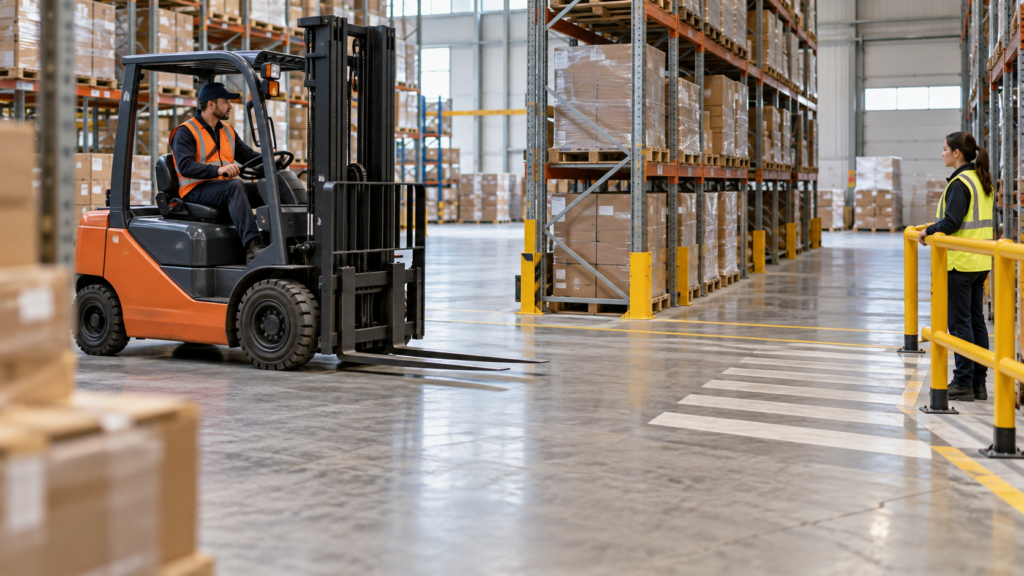
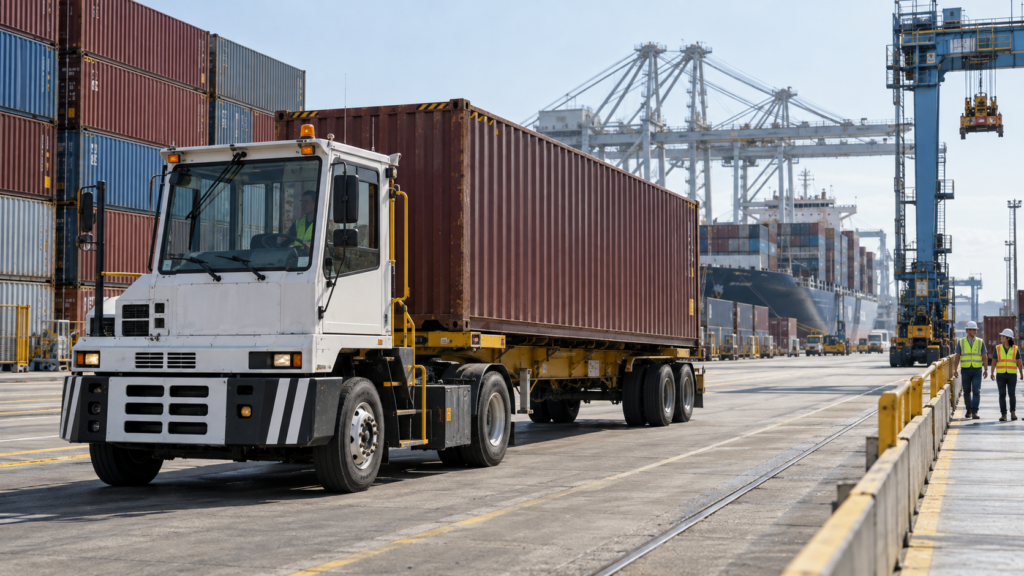
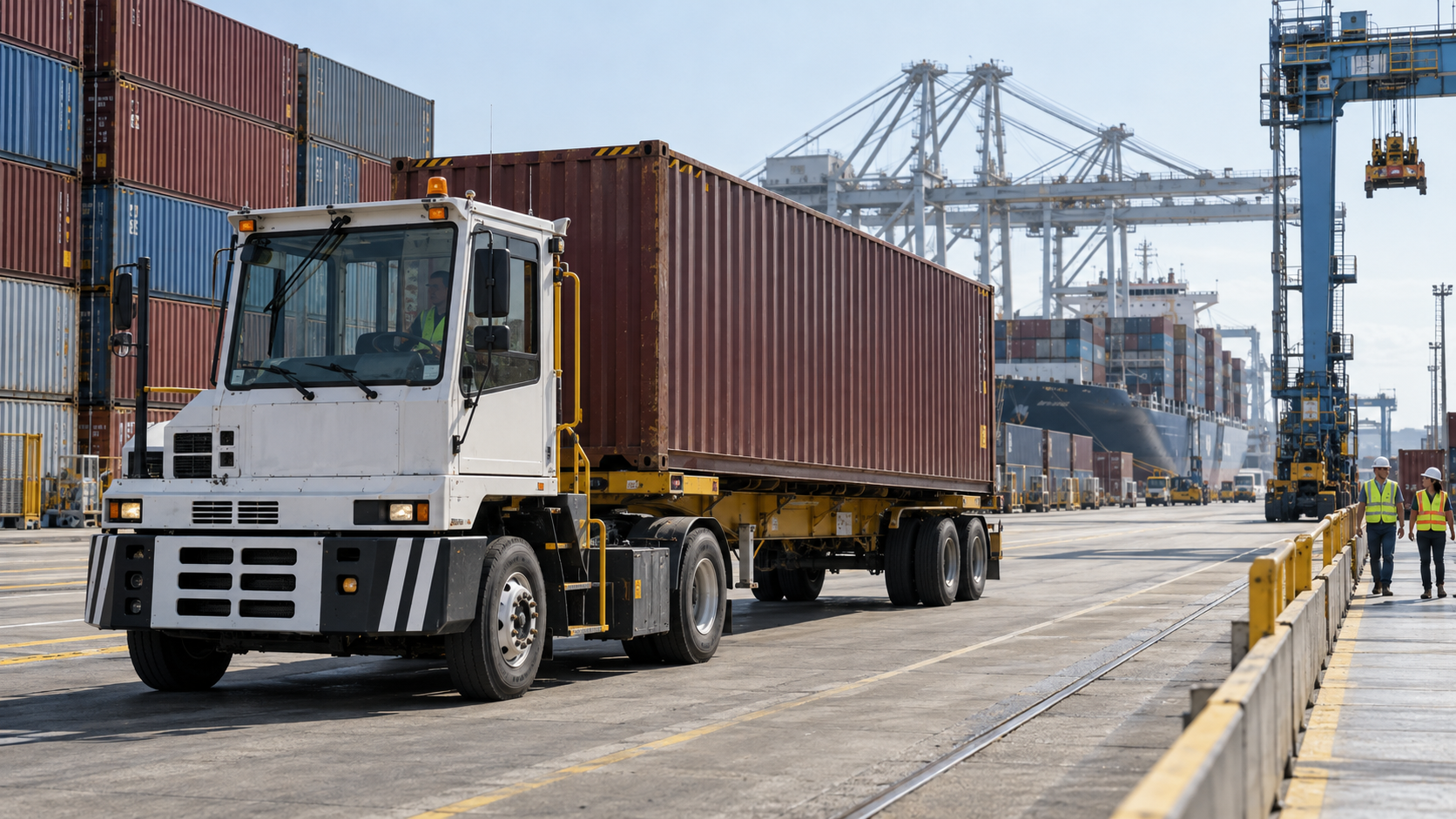
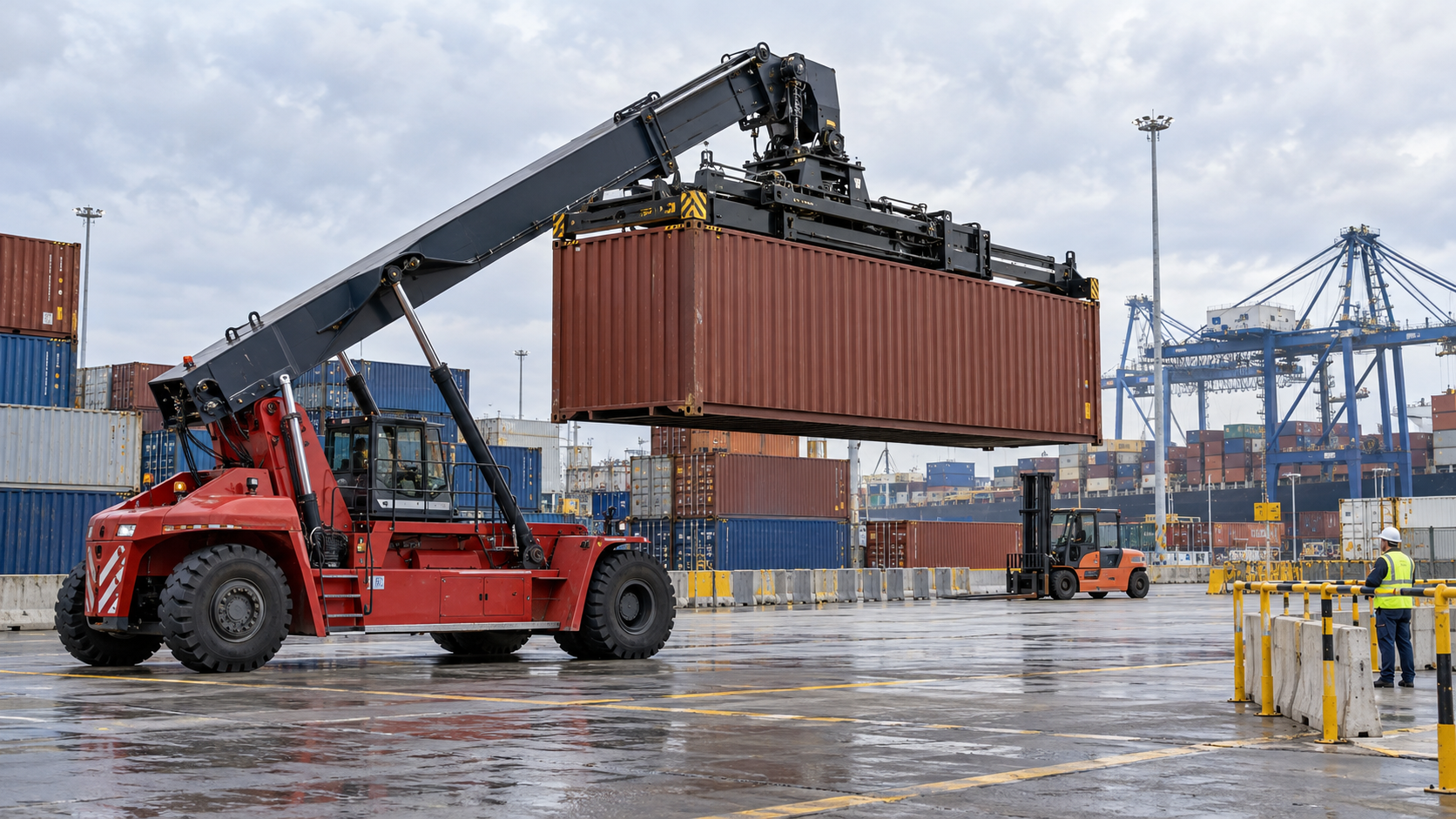
Terminal tractors, forklifts, reach stackers, and maintenance vehicles share constrained routes. Container stacks and trailers change sightlines; RTG lanes introduce additional movements. Vessel turnaround pressures and gate peaks concentrate activity. Contractors may follow unfamiliar routes, while night glare, rain, and dust complicate visibility. Yesterday’s clear crossing can become today’s blind corner.
The most common pedestrian–vehicle risk scenarios in container terminals
Coupling/uncoupling and twist-lock handling zones
Workers approach trailers during tasks that can coincide with reversing. Establish positive communication before movement.
Container stack lanes and intersections
Stacks hide approaching people. Reassess crossings whenever storage arrangements change.
Gate, inspection, and interchange areas
Drivers leave cabs while inspectors and contractors cross congested lanes.
Maintenance bays and refueling zones
Technicians work beside equipment entering or leaving service areas. Separate servicing tasks from vehicle movements.
Why traditional safety controls often fall short in busy yards
Mirrors and signs require attention; noise and fatigue complicate spotter communication. Object-based proximity warnings can become distracting in clutter, depending on configuration. Manual reporting can miss routine exposure.
OSHA’s marine-terminal traffic guidance supports coordinated traffic controls, pedestrian protection, and operator training. A port yard safety system should reinforce those measures, with clear procedures for responding to alerts.
How AI pedestrian detection improves container yard safety
Real-time human recognition in operational blind zones
Blaxtair’s low false-alarm performance is built on two complementary capabilities:
- Dedicated industrial AI: an algorithm trained on a large proprietary database covering real-world pedestrian
situations, postures, environments, and operating conditions. - Precise localization: determining where a detected person is relative to the machine and its configured risk area.
Camera coverage remains essential: AI vision cannot see through containers.
Reduced nuisance alerts to preserve operator trust
Together, these capabilities help Blaxtair recognize people in demanding industrial environments while filtering out irrelevant objects and situations. Fewer nuisance alerts mean less operator distraction and greater trust in warnings, a practical operational advantage to validate during the pilot.
Adaptable zones by vehicle type and yard task
Terminal tractor safety involves different clearances and movements from forklift or stack-handler operations. Agree detection-zone settings and installation suitability for each machine and task.
From alerts to prevention with fleet insights (Blaxtair Connect)
Blaxtair Connect provides detection statistics and hotspot mapping. Review patterns by vehicle and time, relating them to shifts and mapped yard zones. Compare exposure before and after interventions to guide container yard safety decisions.
Operational benefits that matter to terminal leadership
Better container yard safety can help limit incident-related stoppages, investigations, equipment damage, and disrupted moves. Consistent briefings support contractor governance. Documented actions and comparable KPIs strengthen audit preparation and management reviews.
30-day pilot plan for ports and container yards
Week 1: Baseline + risk mapping
Select 5–10 representative vehicles. Map crossings, reversing tasks, and contractor routes. Record operating hours, traffic conditions, and current reports. Historical reports are contextual; comparable alert baselines require the same functioning detection setup.
Weeks 2–3: Deploy + measure
Validate coverage safely, then monitor alerts per 100 operating hours, repeat hotspots, reviewed near-miss signals, and weekly operator feedback. Include night shifts and available adverse-weather conditions. Investigate missed detections and nuisance warnings.
Week 4: Optimize + scale decision
Adjust settings, traffic rules, and briefings. Compare matched operating conditions. Document costs, installation downtime, limitations, and acceptance criteria. Extend testing if exposure is insufficient; 30 days cannot establish a reliable change in rare accident rates.
Download your 30-Day-Container-Yard-Pilot-Scorecard
How we measure impact
Calculate alerts ÷ monitored operating hours × 100.
Define hotspots consistently; distinguish alerts from reviewed near misses. Compare stable windows before and after changes. HSE and operations should review findings weekly, recording traffic volume, configuration changes, downtime, and missing data.
Pilot readiness checklist for container yards
- Name the HSE owner and operations sponsor.
- Confirm vehicle fit, camera coverage, connectivity, and installation windows.
- Agree baseline definitions and scale-up criteria.
- Brief employees and contractors on alerts and limitations.
- Set data-access permissions and retention responsibilities.
What we recommend in practice
Start with one problematic transfer intersection. Combine a traffic-plan review, validated detection coverage, operator briefing, and weekly KPI review. Expand only after the evidence supports the next deployment.
Data integrity note
Detection records may include time, vehicle, and location where available; images depend on configuration. Restrict access by job responsibility and verify available permissions. Document missing geolocation and monitoring gaps so container yard safety reporting remains interpretable.
Conclusion
Improving container yard safety means addressing recurring exposure while supporting predictable yard flow. AI warnings and fleet insights can help teams prioritize action and evaluate it.
Request a container yard assessment and pilot plan. Share your vehicle mix, traffic layout, and priority risks to discuss scope, a proposed 30-day schedule, and measurement deliverables.
FAQs
What is the biggest safety risk in container yards?
Pedestrian exposure to moving equipment is a major container yard safety concern, particularly during reversing and at obstructed crossings. Site assessment determines the highest-priority risks.
How does AI pedestrian detection help port operations without slowing them down?
It warns operators about detected pedestrians and helps managers investigate recurring exposure. Appropriate configuration can limit unnecessary interruptions; operational effects require site validation.
How quickly can a terminal validate results before scaling?
A 30-day pilot can assess coverage, warning relevance, and operator acceptance. Longer testing may be needed for different seasons, operating patterns, or reliable outcome trends.