

Reducing Equipment Downtime: Data-Driven Strategies to Prevent Costly Interruptions
Equipment downtime does more than take one machine out of service. In warehouses, manufacturing facilities, mines, quarries, and other high-intensity operations, an unexpected interruption can affect productivity, schedules, labor allocation, safety, and overall operating costs.
That is why effective equipment downtime prevention requires more than responding quickly when something breaks. Organizations need visibility into what is happening across their fleets, why interruptions occur, and which warning signs appear before operations stop.
By combining connected data, preventive maintenance, safety technology, and standardized inspections, teams can move from reacting to downtime to actively preventing it.
The True Cost of Equipment Downtime
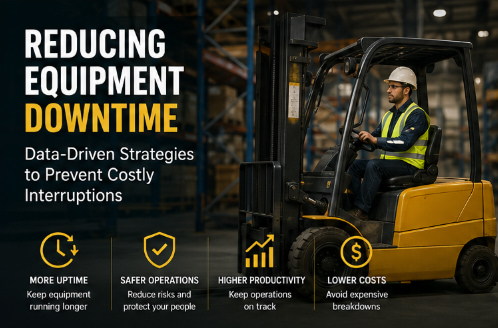
The most visible cost of equipment downtime is usually the repair itself. But the full operational impact can be much larger.
When a forklift, loader, excavator, or other critical vehicle stops unexpectedly, the consequences can include lost production, delayed material movement, idle employees, missed delivery targets, emergency maintenance expenses, and disruption to downstream processes.
Safety incidents can make the impact even greater. A collision or serious near-miss may require an area to be secured while teams investigate the event, inspect equipment, document what happened, and determine whether operations can safely restart.
In interconnected operations, one unavailable machine can therefore create a ripple effect well beyond the vehicle itself.
The goal should not simply be faster repairs. It should be fewer unexpected interruptions in the first place.
Understanding the Link Between Safety and Downtime
Not every unplanned shutdown begins with a mechanical failure. Safety events can also become major downtime triggers.
A pedestrian-machine incident, unsafe operator behavior, repeated alarms, equipment damage, or a hazardous situation requiring investigation can interrupt normal workflows. Even when nobody is injured, unnecessary stops and recurring safety problems can affect productivity.
This creates a direct connection between safety performance and uptime.
AI-based safety technologies can help operators identify genuine hazards around industrial vehicles, while connected systems can give managers greater visibility into recurring risk patterns. Standardized inspection routines add another preventive layer by ensuring vehicles and safety equipment are checked before work begins.
The result is a more controlled operating environment where teams address risks earlier instead of waiting for an incident to force a shutdown.
Using Data to Predict and Prevent Downtime
Modern industrial fleets generate valuable operational and safety data. The challenge is turning that information into action.
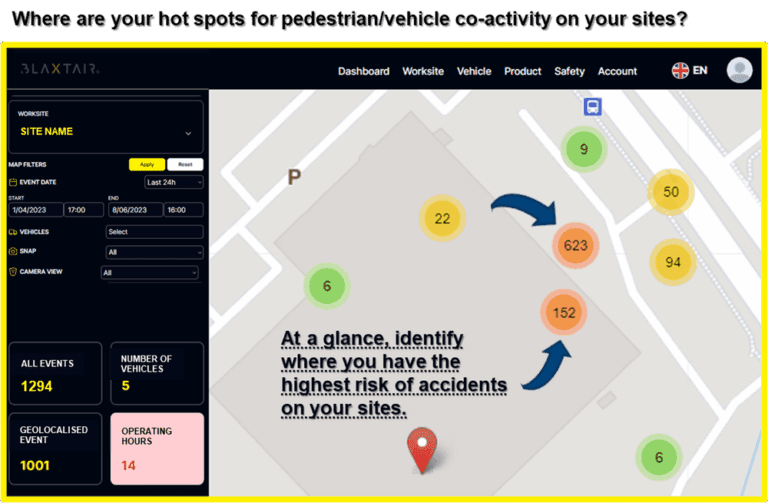
Connected fleet platforms such as Blaxtair Connect can help centralize safety-related insights, giving managers greater visibility into alerts, recurring risk areas, and operating patterns. Combined with maintenance and operational information, these insights can support a more data-driven maintenance strategy.
Managers can use fleet data to:
1. Identify higher-risk equipment. Repeated alerts, incidents, or abnormal usage patterns may point to vehicles that require closer attention.
2. Recognize recurring trends. Looking at patterns over time can reveal issues that individual events may not make obvious.
3. Plan interventions earlier. Maintenance, operator coaching, or site modifications can be scheduled before a developing problem creates a larger interruption.
The objective is to shift from asking, “Why did this machine stop?” to asking, “What is the data telling us before another interruption occurs?”
That transition from reactive maintenance toward proactive and predictive decision-making is central to reducing equipment downtime.
Smart Checklists: Simple Tools, Powerful Impact
Advanced analytics are valuable, but one of the simplest downtime prevention tools remains the checklist.
Pre-shift inspections give operators an opportunity to identify problems before equipment enters active service. When these checks are standardized and digitized, they can also create consistent records for supervisors and maintenance teams.
Depending on the equipment and installed safety systems, checks may include:
- General equipment condition and visible damage
- Power supply and electrical connections
- Cameras and lenses for cleanliness and obstruction
- Sensors and other safety components
- Warning lights and audible alerts
- Tires, forks, attachments, or other machine-specific components
Digital checklists can strengthen accountability because managers can more easily track whether required inspections have been completed and identify repeated failures.
Connected data and disciplined inspections complement each other: analytics identify trends across time, while checklists help prevent basic problems from becoming unexpected stoppages.
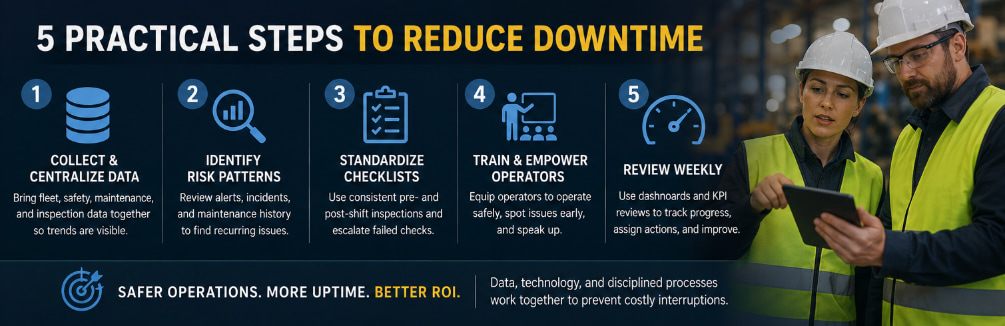
5 Practical Steps to Reduce Downtime in Your Operation
1. Collect and Centralize Data
Bring relevant fleet, safety, maintenance, and inspection information into systems that make trends visible. Fragmented records make recurring problems harder to identify.
2. Identify Risk Patterns
Review alerts, maintenance histories, safety incidents, and near-miss information. Look for repeated problems involving particular machines, locations, shifts, or operating behaviors.
3. Standardize Checklists
Create consistent pre-operation and, where appropriate, post-shift inspection processes. Make responsibilities clear and establish a procedure for escalating failed checks.
4. Train and Empower Operators
Operators are often the first people to notice changing vehicle behavior or recurring site hazards. Train teams not only to operate equipment correctly but also to understand how their actions and observations contribute to uptime.
5. Review Weekly
Turn data review into a routine rather than an occasional reaction to an incident. Weekly dashboard and KPI reviews can help teams identify developing patterns, assign corrective actions, and measure whether interventions are working.
The Bigger Picture: Safety, Uptime, and ROI
Reducing downtime is ultimately about improving the reliability of the entire operation.
Preventive inspections reduce the likelihood that overlooked equipment problems disrupt a shift. Data analysis helps managers identify patterns that require intervention. AI-powered safety systems can provide additional visibility into risks around industrial vehicles. Together, these measures create a continuous improvement cycle.
The return is not limited to equipment availability. A more proactive approach can support safer workflows, more predictable operations, better use of fleet assets, and greater operator confidence.
Organizations should therefore evaluate downtime alongside safety and operational KPIs rather than treating each area as a separate initiative.
When safety data, fleet insights, maintenance practices, and operator feedback work together, teams gain a clearer picture of where interruptions originate—and where preventive action will have the greatest impact.
Conclusion
Reducing equipment downtime starts with visibility and continues through disciplined, continuous improvement.
By combining real-time operational insights, proactive maintenance, standardized checklists, and safety data, operations teams can move away from constant firefighting and toward informed prevention.
The question is no longer simply how quickly your organization can recover from a stoppage. It is how much of that downtime can be prevented through better information and earlier action.
Want greater visibility into the safety events affecting your industrial fleet? Explore Blaxtair Connect and discover how connected safety insights can help your team identify risk patterns and support more efficient operations.
FAQs
What’s the most effective way to reduce equipment downtime?
The most effective approach combines proactive maintenance with reliable operational data. Connected systems can help teams identify recurring risks and warning signs, while standardized inspections address equipment issues before a shift begins. Together, these practices support earlier intervention and reduce dependence on reactive repairs.
How can safety systems influence downtime reduction?
AI-powered safety systems can help reduce interruptions associated with collisions, near-misses, and hazardous vehicle-pedestrian interactions. When safety event data is also analyzed over time, managers can identify recurring risks and implement targeted changes to workflows, training, or site design.
How often should downtime data be reviewed?
A weekly review is a practical starting point for many fleet and maintenance teams. Regular reviews make it easier to spot trends early, measure corrective actions, and adapt maintenance and safety strategies. High-risk or high-intensity operations may benefit from more frequent monitoring.