

Operator Access Control: Safer, More Accountable Industrial Fleets
Industrial fleets operate across multiple shifts, mixed teams, and fast-paced environments where safety depends on consistent operating procedures. Yet one common weakness remains: uncontrolled vehicle access. When unauthorized personnel operate equipment or pre-start inspections are skipped, organizations face a higher risk of accidents, equipment damage, compliance issues, and liability.
Operator Access Control addresses this challenge by ensuring every vehicle is operated only by an authorized driver, after completing required safety checks, with every activity recorded in a traceable system. The result is a safer workplace, stronger operator accountability, and a more proactive safety culture.
Why Access Control Has Become a Safety Requirement, Not a “Nice-to-Have”
Industrial facilities increasingly recognize that vehicle access is a critical part of risk management. Multi-shift operations, temporary workers, contractors, and mixed fleets make it difficult to verify who is using equipment and whether safety procedures are consistently followed.
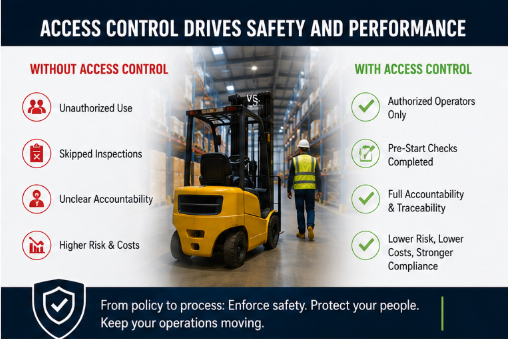
Without effective access control, organizations commonly face:
- Increased collision and near-miss risks
- Missed pre-start inspections
- Difficulty determining responsibility after incidents
- Greater compliance and audit challenges
- Higher legal and insurance exposure
By ensuring the right operator uses the right vehicle under the right conditions, access control transforms safety from a policy into an enforceable process.
What “Operator Access Control” Means in Practice
Operator access control combines identification, authorization, and documentation into a single workflow. A complete system enables organizations to:
- Identify who is operating each vehicle
- Verify that the operator is authorized
- Require completion of pre-start safety checks
- Maintain a digital record of every operating session
With Blaxtair Checklist, operators identify themselves using a personal code, with optional PIN authentication, creating accountability before the vehicle is placed into service. This simple process strengthens compliance while reducing administrative effort.
The Commercial Case: The Cost of “Uncontrolled” Vehicle Use
Poor vehicle access management affects far more than safety performance. Unauthorized or undocumented vehicle use generates hidden costs throughout the organization.
Safety incidents may lead to injuries, investigations, operational downtime, and reputational damage. Equipment misuse increases repair costs, accelerates wear on forks and attachments, and shortens vehicle lifespan. Missed inspections allow mechanical issues to go unnoticed until they become expensive failures.
Compliance also becomes more difficult when inspections cannot be verified or operator records are incomplete. In the event of an accident, organizations may struggle to demonstrate due diligence during insurance claims or regulatory audits.
Implementing Operator Access Control standardizes authorization, inspection, and documentation across the fleet. Instead of relying solely on individual behavior, companies establish a repeatable process that protects employees, equipment, and business continuity while providing clear evidence of compliance.
How Blaxtair Checklist Enables Access Control and Accountability
1) Driver Identification Establishes Responsibility
Each operator identifies themselves using a personal code, with optional PIN authentication. Every vehicle session is linked to a specific individual, eliminating anonymous equipment use and improving fleet operator accountability.
2) Pre-Start Checks Enforce Safe Authorization
Before a vehicle can be used, operators complete a digital pre-start checklist tailored to the vehicle and work environment. This helps identify defects early while reinforcing consistent safety procedures.
3) Start Restriction Prevents “Known-Unsafe” Operation
Organizations can define rules that either notify operators or prevent vehicle start-up when critical defects are reported. This helps keep unsafe equipment out of service until corrective action is taken.
4) Digital Records Support Compliance and Audits
Every authorization, checklist, and reported defect is automatically recorded, creating a searchable audit trail that simplifies investigations, regulatory inspections, and internal reporting.
Safety Benefits Beyond “Compliance”
Operator Access Control addresses common root causes of incidents by preventing:
- Unauthorized or untrained operators from using vehicles
- Skipped inspections before high-risk tasks
- Repeated unsafe behavior without follow-up
- Uncertainty after near misses about who was operating the vehicle
By connecting identity, authorization, and pre-start verification, organizations strengthen safety discipline without increasing supervisors’ administrative workload.
The “Implied” Operational Benefits Buyers Care About
Beyond compliance, access control delivers measurable operational value:
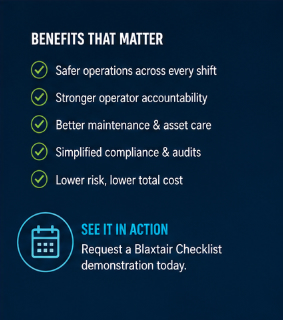
- Lower equipment damage through improved accountability
- Earlier defect reporting for better maintenance planning
- Fewer mid-shift failures and operational disruptions
- Consistent safety governance across employees and contractors
- Faster incident investigations through complete digital records
Implementation Plan: Rolling Out Access Control Across a Fleet
Step-by-Step Deployment
- Define operator groups and authorization levels
- Configure identification methods (code or PIN)
- Create digital checklists by vehicle and site
- Set rules for alerts or start restrictions
- Train supervisors on reporting workflows
- Monitor adoption and continuously improve
Key KPIs
Track:
- Percentage of vehicle sessions linked to an identified operator
- Checklist completion rate before operation
- Prevented start-ups due to critical defects
- Repeat defects by vehicle, shift, or operator group
- Audit retrieval time for records
Conclusion
Operator Access Control helps organizations move beyond manual processes toward a safer, more accountable fleet. By combining driver identification, digital inspections, controlled authorization, and traceable records, companies reduce operational risk while improving compliance, maintenance, and productivity.
Discover how Blaxtair Checklist helps standardize operator authorization, simplify compliance, and strengthen fleet safety across every shift.
FAQs
What is operator access control in an industrial fleet?
Operator access control in an industrial fleet is the process of identifying drivers and restricting vehicle use to authorized personnel, improving safety and accountability across shifts and sites.
How does operator access control improve workplace safety?
Operator access control improves workplace safety by preventing unauthorized use and ensuring pre-start safety checks are completed before operation, reducing the likelihood of incidents caused by skipped inspections or untrained use.
How does operator access control strengthen accountability after incidents?
Operator access control strengthens accountability after incidents by linking vehicle use and inspection logs to an identified operator and storing records digitally, making investigations and audits faster and more defensible.