

How AI Perception Technology Can Boost OEM Brand Value and Compliance
For today’s OEMs, innovation is no longer measured solely by machine performance. Customers, regulators, and investors increasingly expect equipment manufacturers to deliver smarter, safer, and more responsible machines.
As industrial markets evolve toward greater automation and stricter safety requirements, AI-powered perception technology is emerging as a key driver of competitive advantage. By embedding intelligent perception systems directly into machine design, OEMs can move beyond basic compliance and create products that deliver measurable safety, productivity, and operational benefits.
More importantly, these technologies help manufacturers strengthen their brand reputation, support ESG objectives, and position themselves as leaders in the next generation of industrial equipment.
Why Safety Is Now a Core Element of Brand Value
In industrial equipment markets, safety has become synonymous with credibility.
Whether purchasing forklifts, loaders, mining vehicles, construction equipment, or specialized machinery, customers increasingly evaluate manufacturers based on their commitment to protecting operators, workers, and surrounding environments.
Several factors are driving this shift:
- Rising regulatory expectations
- Increased focus on ESG performance
- Growing awareness of workplace safety risks
- More sophisticated procurement requirements
- Greater public scrutiny of industrial accidents
As a result, safety is no longer viewed as an optional feature. It is an essential component of machine design and a major contributor to brand perception.
OEMs that integrate advanced AI perception systems demonstrate leadership in innovation, responsibility, and worker protection. These qualities strengthen customer confidence and contribute directly to long-term brand equity.
When safety becomes part of the product’s DNA, it becomes part of the brand’s identity.
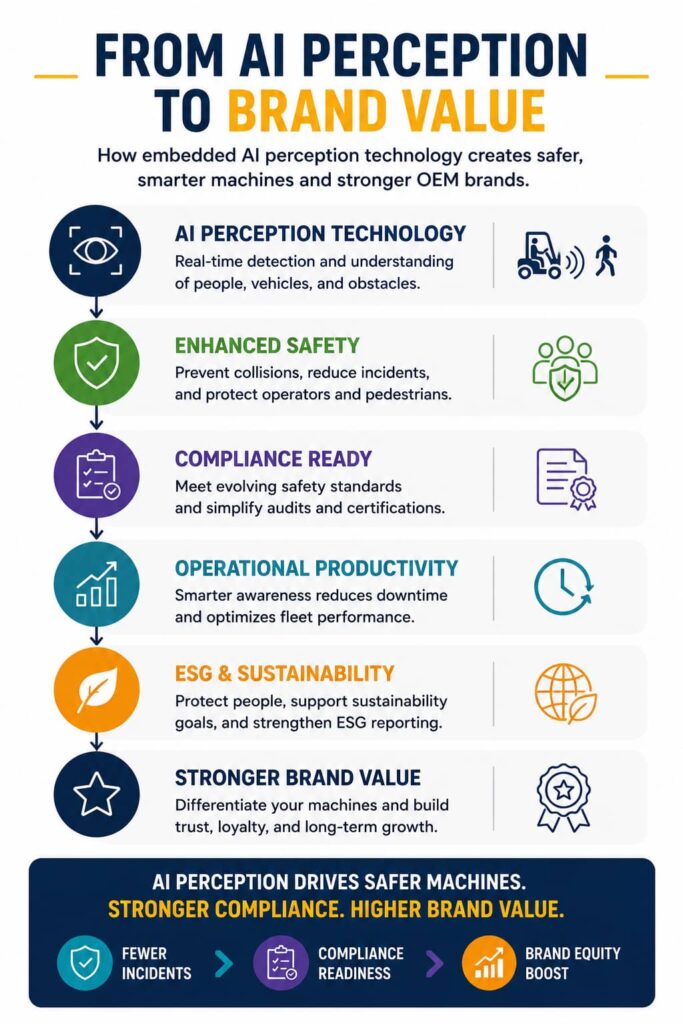
AI Perception Technology: The New Benchmark for Compliance and Differentiation
Industrial safety regulations continue to evolve worldwide. New standards increasingly encourage manufacturers to implement technologies capable of proactively reducing risk rather than simply reacting to incidents.
In sectors ranging from material handling to construction and mining, regulators are placing greater emphasis on:
- Hazard prevention
- Human-machine interaction safety
- Risk reduction by design
- Intelligent monitoring systems
- Traceable safety performance
AI-powered perception technology directly supports these objectives by enabling machines to better understand and react to their surroundings in real time.
For OEMs, integrating perception technology offers several advantages:
- Simplified compliance strategies
- Stronger safety documentation
- Improved audit readiness
- Future-proof product development
- Alignment with evolving international standards
Beyond compliance, AI perception technology has become a powerful differentiator.
Large industrial customers increasingly favor manufacturers that offer embedded intelligent safety systems. Public tenders and procurement processes often include safety and innovation criteria that influence purchasing decisions.
In this environment, AI perception is rapidly becoming a hallmark of premium equipment.
How AI Perception Technology Enhances Brand Reputation and Market Trust
A strong reputation takes years to build but can be damaged by a single high-profile incident.
Industrial accidents often generate consequences far beyond direct financial costs, including:
- Brand damage
- Customer dissatisfaction
- Legal exposure
- Increased warranty claims
- Negative media attention
- Loss of future business opportunities
By proactively helping prevent accidents and improving operational awareness, AI perception technology supports stronger brand trust.
Demonstrates Commitment to Innovation
Customers increasingly associate intelligent safety systems with engineering excellence.
Embedding advanced perception technology signals that an OEM is investing in meaningful innovation that solves real-world operational challenges.
Reinforces Customer Confidence
Organizations operating industrial fleets are under constant pressure to improve safety and productivity simultaneously.
OEMs that provide integrated perception systems help customers achieve both objectives, creating stronger long-term relationships and increasing customer loyalty.
Supports Responsible Product Design
Modern perception technology enables manufacturers to demonstrate a proactive approach to risk management and operator protection.
This reinforces brand positioning around quality, responsibility, and leadership.
Creates Strong Marketing and PR Opportunities
Safety innovation is a powerful story.
OEMs can showcase embedded AI capabilities in product launches, ESG reports, sustainability communications, customer success stories, and industry events.
The Blaxtair Advantage: A Perception Technology Platform for Next-Generation Machines
Blaxtair is far more than a pedestrian detection solution.
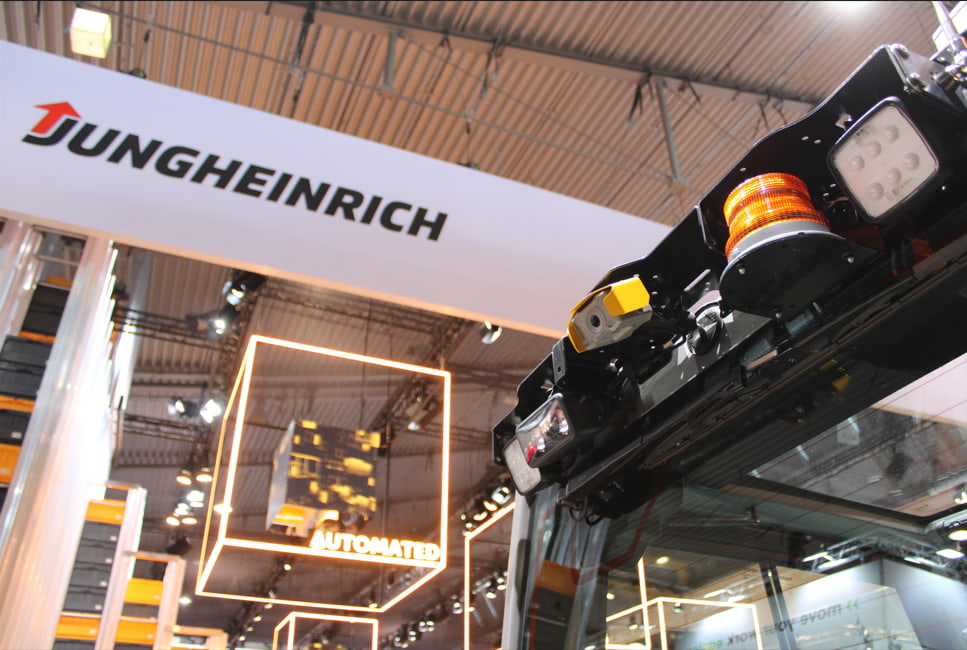
As a pioneer in embedded AI and perception technology for industrial vehicles, Blaxtair provides OEMs with a scalable platform capable of understanding complex environments in real time.
Rather than integrating a single safety feature, OEMs gain access to a growing ecosystem of intelligent software modules designed to enhance machine safety, productivity, connectivity, and operational performance.
The Blaxtair ecosystem includes technologies such as:
- Pedestrian Detection
- Vehicle Detection
- Specific Obstacle Detection
- Dynamic Safety Zones
- Connected Safety Analytics
- Digital Inspection Checklists
- Fleet Data Integration
- Operational Intelligence Tools
Built on a powerful AI architecture, the platform enables manufacturers to continuously add value throughout the machine lifecycle.
OEMs Integrating Blaxtair Perception Technology Gain:
- A future-ready embedded AI platform
- Enhanced machine safety capabilities
- Improved operator awareness
- Greater product differentiation
- Connected operational insights
- Simplified compliance readiness
- Faster innovation cycles
- Access to future software modules and capabilities
For OEMs, this transforms perception technology from a safety feature into a strategic product platform.
ESG, Compliance, and the Business Case for AI Perception Technology
Environmental, Social, and Governance (ESG) performance has become a critical consideration for industrial manufacturers.
AI perception technology contributes directly to two key ESG pillars.
Social: Protecting People
Worker safety remains one of the most visible indicators of corporate responsibility.
AI-powered perception systems help:
- Reduce workplace incidents
- Improve operator awarenes
- Protect pedestrians
- Strengthen safety culture
These outcomes create measurable value for both OEMs and their customers.
Governance: Demonstrating Responsible Innovation
Organizations must increasingly demonstrate how they identify, monitor, and mitigate operational risks.
AI perception technology provides:
- Actionable safety data
- Traceable performance metrics
- Risk management insights
- Compliance documentation support
These capabilities strengthen governance frameworks and support transparent reporting.
Building Long-Term Corporate Value
As customers, investors, and regulators place greater emphasis on safety and sustainability, manufacturers that embed intelligent technologies gain a competitive advantage that extends far beyond compliance.
Real Example: How Jungheinrich Strengthened Its Safety Offering with Blaxtair
One of the strongest examples of AI perception technology creating OEM value is the partnership between Jungheinrich and Blaxtair.
As one of the world’s leading intralogistics equipment manufacturers, Jungheinrich continuously invests in technologies that improve safety, productivity, and operational performance for its customers.
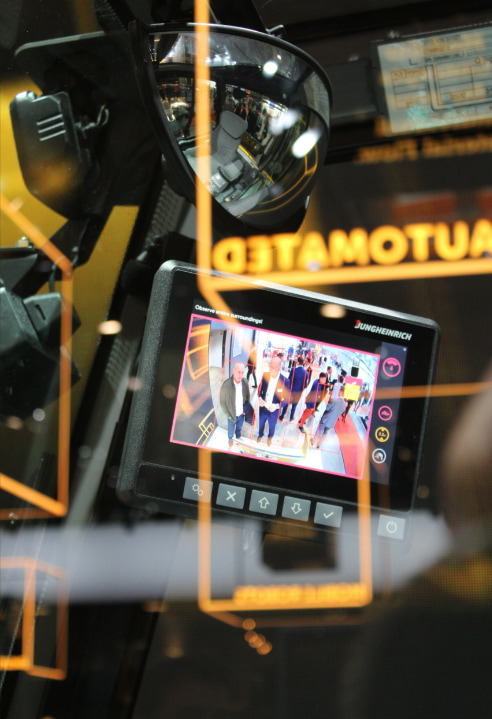
Following a close technical collaboration, Jungheinrich selected the latest generation of Blaxtair AI technology for integration into its forklift offering. Beginning in 2025, the solution became available through Jungheinrich’s global commercial network, providing customers with direct access to advanced AI-powered perception capabilities.
The partnership illustrates several strategic benefits that perception technology can deliver to OEMs:
- Enhanced machine intelligence
- Stronger safety performance
- Increased product differentiation
- Greater customer value
- Support for evolving compliance requirements
- Alignment with market demand for intelligent equipment
For Jungheinrich, integrating AI perception technology strengthens its ability to offer customers innovative solutions that improve both safety and operational efficiency.
For Blaxtair, the collaboration demonstrates how perception technology is increasingly becoming a core component of next-generation industrial equipment rather than an aftermarket add-on.
The partnership also highlights an important market reality: leading OEMs are no longer evaluating AI solely as a safety tool. They are adopting it as a strategic technology platform that enhances machine value throughout the product lifecycle.
Implementation Roadmap for OEMs
Successfully integrating perception technology requires a structured approach.
1. Define Strategic Objectives
Identify goals related to:
- Safety performance
- Product differentiation
- ESG initiatives
- Regulatory readiness
- Customer value creation
2. Integrate During Product Development
Embedding perception technology at the design stage enables:
- Better system performance
- Simplified certification
- Improved user experience
- Reduced integration costs
3. Validate in Real-World Conditions
Testing should evaluate:
- Detection performance
- Environmental robustness
- User acceptance
- Compliance alignment
- Operational impact
4. Communicate the Value
Technology only creates market value when customers understand its benefits.
OEMs should actively communicate:
- Safety improvements
- Productivity gains
- Sustainability benefits
- Innovation leadership
- Customer success stories
Conclusion
AI perception technology is rapidly becoming a defining characteristic of next-generation industrial equipment.
For OEMs, the opportunity extends far beyond regulatory compliance. Embedded perception systems help strengthen brand reputation, improve customer trust, support ESG objectives, and create meaningful product differentiation in increasingly competitive markets.
The partnership between Jungheinrich and Blaxtair illustrates how leading manufacturers are already leveraging AI-powered perception platforms to enhance machine value and prepare for the future of industrial mobility.
By integrating perception technology today, OEMs position themselves to lead tomorrow’s market.
Looking to differentiate your equipment portfolio with embedded AI perception technology?
Contact Blaxtair’s OEM team to discover how our perception platform can help accelerate innovation, strengthen compliance, and create lasting value for your customers.
FAQs
How does AI perception technology improve OEM brand value?
AI perception technology demonstrates innovation, responsibility, and leadership in machine design. It helps OEMs differentiate their products, strengthen customer trust, and enhance their reputation for safety and technological excellence.
What is perception technology in industrial equipment?
Perception technology uses artificial intelligence, cameras, sensors, and advanced software to allow machines to understand and interpret their environment in real time. Applications include pedestrian detection, vehicle detection, obstacle recognition, zoning management, and operational analytics.
Does AI perception technology help support compliance and ESG goals?
Yes. AI-powered perception systems help reduce workplace risks, improve safety performance, generate measurable operational data, and support compliance documentation. These capabilities contribute directly to both regulatory readiness and ESG reporting.