
The Hidden Cost of Near Misses: How AI Safety Systems Protect More Than People
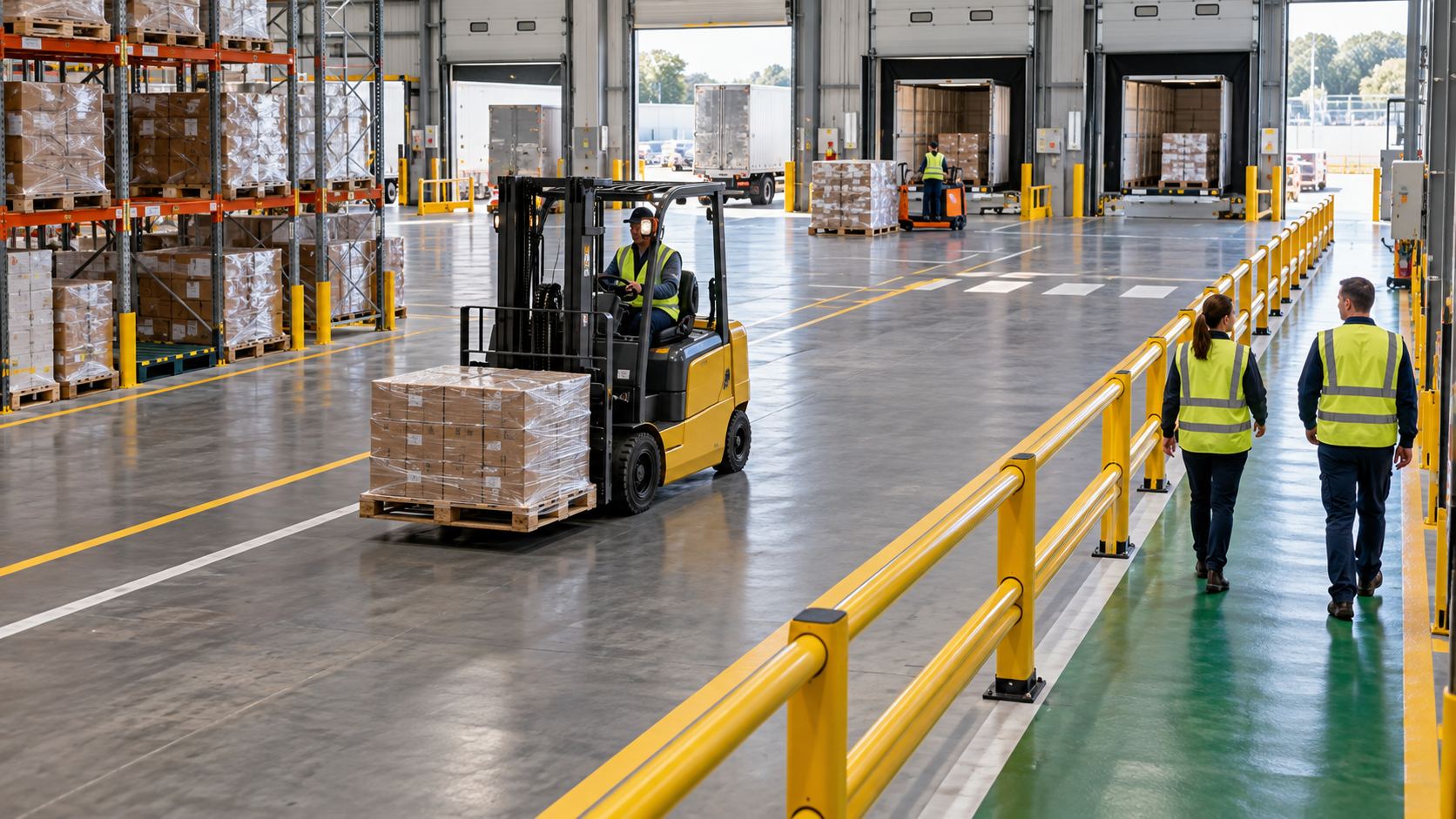
A forklift brakes suddenly. A pedestrian steps back. Nobody is injured, and the shift continues. It can look like nothing happened.
Yet near misses reveal conditions that could lead to serious harm—and may already be disrupting operations. Stopped workflows, supervisor interventions, and recurring congestion consume time even when there is no injury or damage.
For safety and operations managers, understanding these events creates an opportunity to protect people while improving productivity. AI pedestrian detection and safety analytics can help reveal where risks concentrate, guide corrective action, and build a measurable business case for prevention.

When “Almost” Is Still Too Close: What a Near Miss Really Means
A workplace near miss is an unplanned event that could have caused harm under slightly different circumstances. Think of a reversing forklift narrowly avoiding someone crossing behind it.
OSHA encourages employers to investigate close calls alongside incidents involving injuries, using findings to identify hazards and correct underlying causes.
The useful question is what allowed the encounter: restricted visibility, an obstructed walkway, conflicting traffic routes, or pressure to meet dispatch targets?
A near miss does not prove that an injury will follow. It provides a concrete reason to examine whether existing controls are working.
The Hidden Financial Impact of Near Misses
Even without injury, a close call can generate operational costs:
- Interrupted work: equipment stops while teams assess the situation.
- Investigation time: operators, supervisors, and safety staff review events.
- Lost productivity: delayed movements affect picking, loading, or deliveries.
- Corrective work: teams adjust routes, signage, or operating procedures.
Equipment damage and compensation claims belong to actual loss incidents; they should not automatically be assigned to every near miss. However, recurring unsafe interactions can expose a business to those future losses.
OSHA’s Safety Pays tool recognizes that injury costs extend beyond direct claims to disruption, investigation, and damaged property. Its estimates vary with circumstances; they do not establish a universal cost per near miss.
Start with your own downtime and labor records.
Why Near Miss Data Is a Missed Opportunity
Near misses are easy to overlook when reporting interrupts work or employees expect blame. Records may capture a dramatic encounter while missing repeated exposure at the same crossing.
AI detection adds another source of information, but a pedestrian alert is not automatically a confirmed near miss. An alert signals a detection under the configured conditions; reviewing the context determines its significance.
Combine system data with operator feedback and site observations. Look for concentrations by location, shift, or machine.
Also account for reporting changes: more recorded events after deployment may reflect better visibility rather than deteriorating safety.
How AI Safety Systems Turn Near Misses Into Actionable Insights
Blaxtair pedestrian detection detects and locates people around industrial machinery and alerts operators to danger. Blaxtair Connect provides detection statistics, timestamps, and hotspot mapping to help teams investigate recurring exposure.
These capabilities support a practical improvement cycle:
- Identify repeated alerts around a crossing or loading area.
- Observe traffic and discuss the conditions with operators.
- Introduce suitable controls, such as physical separation or revised routes.
- Measure whether exposure and related disruptions decrease.
Event records can support safety reviews and documentation. They do not independently establish compliance or prove that an accident was prevented.
The value comes from turning information into action—and checking whether that action works.
The ROI of Preventing the Accident That Almost Happened
For equipment downtime prevention, track interruption hours, repair spending, and replacement equipment costs. Compare equivalent periods and account for changes in operating hours, throughput, and fleet size.
Calculate:
ROI = (Measured savings − Total program cost) ÷ Total program cost × 100
Include hardware, installation, subscriptions, training, maintenance, and corrective measures. Avoid counting the same recovered time as both labor savings and additional output.
Potential insurance benefits should remain outside confirmed savings unless validated by the insurer.
From Near Miss to No Miss: Building a Predictive Safety Culture
A predictive approach means using recurring patterns to prioritize action before someone is hurt. It does not mean that software can forecast every incident.
Make reporting simple, discuss findings without blame, and show employees what changed because they spoke up. Pair detection technology with physical separation, operator training, and daily equipment checks.
Track reviewed high-risk events per 1,000 machine operating hours alongside corrective-action completion and disruption time. Maintain consistent detection settings when comparing periods.
The objective is a sustained reduction in exposure, supported by reliable evidence—not merely fewer reports or quieter alarms.
Conclusion
Near misses provide an opportunity to correct dangerous conditions before the consequences become more serious. Their business value lies in what teams learn and change.
Combining AI pedestrian detection, analytics, and operational follow-through helps companies address recurring exposure and evaluate measurable improvements.
FAQs
Why should companies track near misses if no one was hurt?
Near misses reveal hazardous situations before an injury occurs. Recording and investigating them helps teams identify weaknesses in traffic management, visibility, and work practices. Tracking related interruptions also makes operational costs easier to understand.
How can AI help prevent near misses?
AI pedestrian detection can alert operators when someone enters a configured detection zone. Analytics help safety teams identify recurring exposure and prioritize corrective action. These tools support trained operators and effective site controls; they cannot eliminate every risk.
What are the financial benefits of reducing near misses?
Addressing the conditions behind near misses may reduce operational interruptions and exposure to damaging incidents. Financial benefits should be measured through downtime, repair costs, and productivity records. Lower insurance premiums or legal costs are possible outcomes, not automatic savings.